
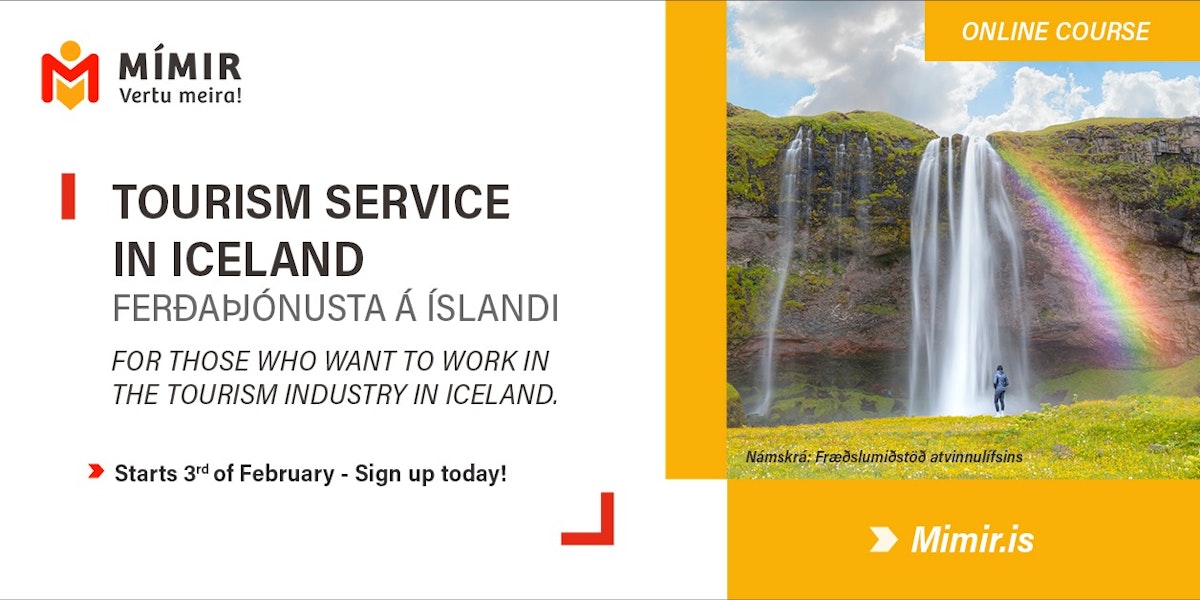
Tourism service in Iceland | Ferðaþjónusta
About the course
The course consists of learning about customer service in tourism as well as practicing basic Icelandic skills in service professions. This is a practical course where you strengthen your skills to be able to provide good service to a diverse group of customers and deal with challenges that come up. You also learn job related Icelandic to be able to have basic communication in Icelandic. The course is taught in English.
The course is taught on Zoom, Monday–Thursday from 9:00 to 12:45. From March 2–5, students will take part in a field study at companies in the industry.
Subjects
Rights and responsibilities at work
Students learn the basic rules of the workplace, employment rights, contracts, and how to protect themselves at work.
Basic workplace skills
Students learn good work habits, why work processes matter, time management, and how to work well in a team.
Communication and multicultural awareness
Students learn how to communicate clearly and politely with coworkers and customers, and how to understand and respect different cultures.
Appearance and customer service
Students learn how professional appearance and positive attitude influence customer service.
Main tourist attractions in Iceland
Students get an overview of popular places in Iceland and learn how to describe them simply and accurately.
Work-related Icelandic – level A1
Students learn basic Icelandic words and phrases useful for work, such as greetings, simple questions, and everyday workplace language.
IT skills, CV and cover letter
Students learn to use essential computer programs and create a simple CV and cover letter.
For whom?
This course is for individuals, 18 years and older, who want to learn about tourism service in Iceland.
To participate in the program and to ensure the best possible learning outcomes, students must have skills at level A2.1 in English according to the Common European Framework of Reference for Languages.
Further information
- Assessment is based on attendance, project work and active participation in the
program.
- To complete the program and graduate with a diploma, it is necessary to achieve 80% attendance.